
Description
Journey to Tibet.
Print edition. Signed by the artist.
A4 11.7 x 8.5 inches
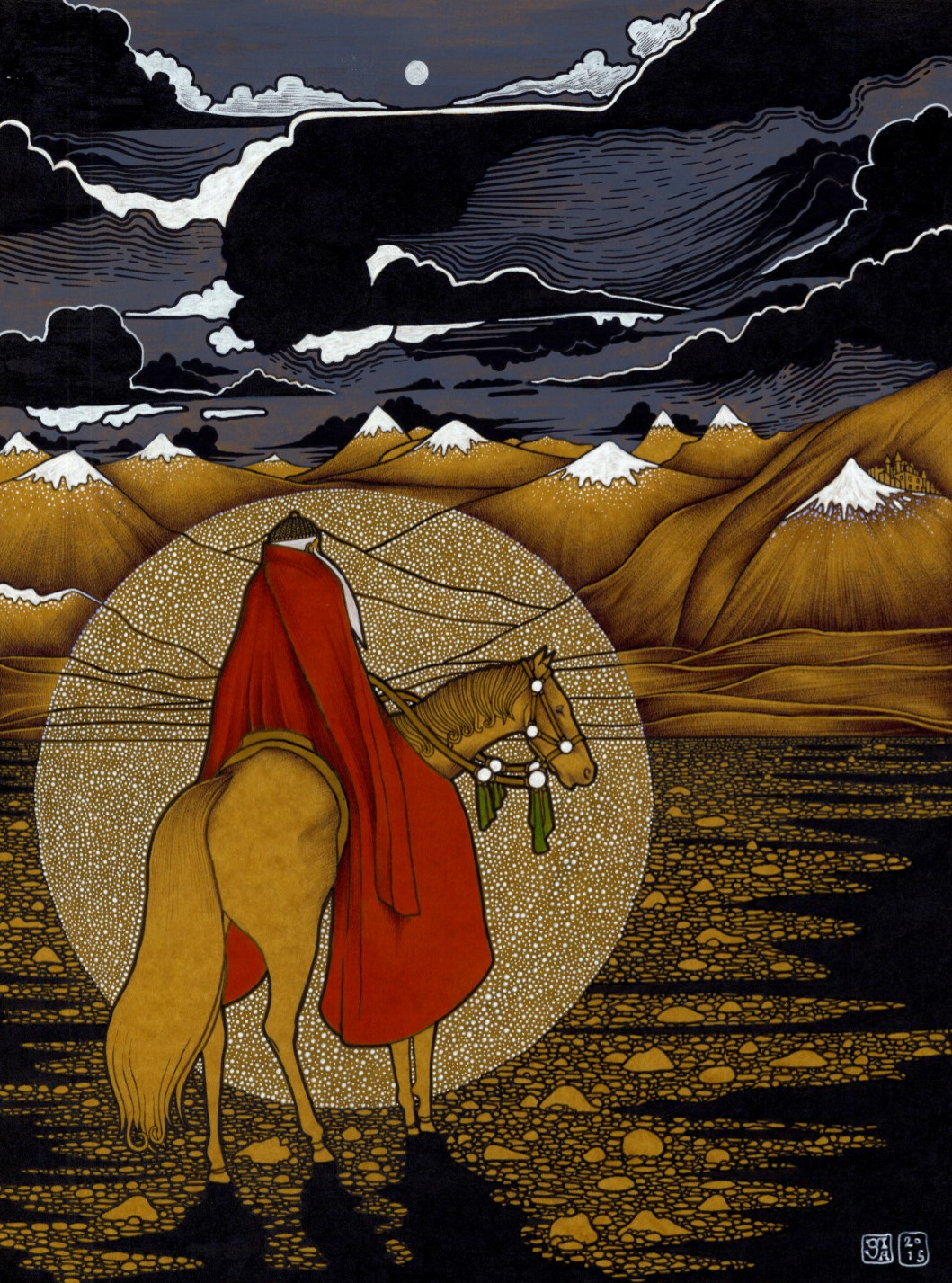
The journey symbolizes not a physical trek, but a profound inner pilgrimage toward wisdom, impermanence, and ultimate meaning. Tibet, rendered in faint washes of ink, is less a geographical destination than a spiritual archetype: the mythical Shambhala, a hidden realm of enlightened consciousness, or the stark, elevated purity of a mountain monastery. It represents an unattainable ideal, a state of being rather than a place to arrive.
The old man himself is the central symbol. His advanced age signifies a life lived, burdens carried, and the shedding of worldly ambition. He is not a youthful seeker, but one in the final chapter, whose journey is now one of essence, not acquisition. His gaze is not one of eager anticipation, but of contemplative recognition—as if viewing an inner landscape made visible. The horse, a traditional symbol of the body, instinct, and life force, is here weary and steadfast. It suggests the mortal vehicle that has carried him this far, now pausing at the boundary between the known world and the transcendent.
The nebulous, fading mountains of Tibet, emerging from mist and empty space, embody the Buddhist principle of Śūnyatā—emptiness and illusion. The destination is literally formless, a visual echo of the understanding that the true journey ends in the dissolution of the ego and its attachments. The old man does not race forward; he beholds. This pause is the heart of the symbolism: the realization that the seeking itself is the destination. The wisdom lies in understanding that the distant, pure land is a reflection of the mind’s own potential for clarity, seen only after a long life’s travels.
Thus, the painting symbolizes the ultimate interior voyage. The horse and rider have traversed the rugged terrain of experience, desire, and suffering, only to find that the promised sanctuary is not a refuge to be entered, but a truth to be witnessed. The journey to Tibet becomes a metaphor for awakening—a slow turning of the soul toward its own highest nature, glimpsed at last from afar, beautiful precisely because it remains, like the faint ink, just beyond the grasp of the tangible world
https://www.youtube.com/@seamusmcardle857